 Loading... Please wait...
 EUR
EUR

- Home
- Antibodies
- Anti-Tag Antibodies
Anti-Tag Antibodies
Detect every tag
with precision
High-specificity antibodies against the most widely used epitope, fluorescent and affinity tags — FLAG (DDDDK), Myc, HA, V5, GFP, GST and MBP — for confident detection and purification of your recombinant proteins, in mouse, rabbit, monoclonal, polyclonal and HRP-conjugated formats.
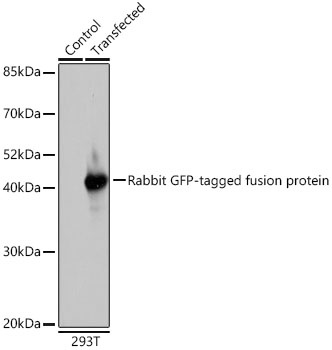

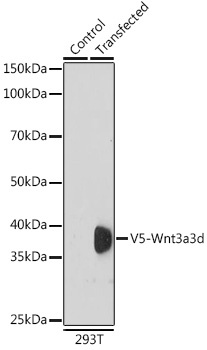
FLAG · Myc · HA · GFP
Tags covered
Mouse & Rabbit
Host options
Mono, Poly & HRP
Formats available
1,000+
Citations
What are anti-tag antibodies?
Anti-tag antibodies recognise short peptide sequences or protein domains that are genetically fused to a recombinant protein of interest. Because the tag — rather than the target protein itself — provides the epitope, a single well-characterised antibody can be used to detect, quantify, immunoprecipitate or purify virtually any tagged construct, regardless of the protein it is attached to.
Tags fall into three broad families: epitope tags such as FLAG (DDDDK), Myc, HA and V5; fluorescent proteins such as GFP; and affinity / fusion tags such as GST and MBP that also aid solubility and purification. Assay Genie's anti-tag range is validated across western blot, immunofluorescence, immunoprecipitation and ELISA, and is available in mouse and rabbit hosts as monoclonal, polyclonal and HRP-conjugated formats to fit any workflow.
Popular anti-tag antibodies
A curated selection of high-performing anti-tag antibodies for detection and purification workflows.
Types of protein tags
Choosing the right tag depends on your application, the size of your construct and whether you need detection, purification or imaging.
| Tag | Family | Size / sequence | Common uses |
|---|---|---|---|
| FLAG (DDDDK) | Epitope tag | 8 aa · DYKDDDDK | Detection, immunoprecipitation and affinity purification of fusion proteins |
| Myc | Epitope tag | 10 aa · EQKLISEEDL | Detection, IP and tracking of expression in cells |
| HA | Epitope tag | 9 aa · YPYDVPDYA | Detection, IP and subcellular localisation studies |
| V5 | Epitope tag | 14 aa · GKPIPNPLLGLDST | Detection and multi-tag co-expression experiments |
| GFP | Fluorescent protein | ~27 kDa | Live-cell imaging, detection and IP of GFP fusions |
| GST | Affinity / fusion tag | ~26 kDa | Pull-down, purification and detection of GST fusions |
| MBP | Affinity / fusion tag | ~42 kDa | Solubility enhancement, purification and detection |
Antibodies you can build a result on
Validated across applications
Every anti-tag antibody is tested in the applications it is sold for — from western blot to IF/ICC and immunoprecipitation — with recommended dilutions supplied on each datasheet.
High specificity, low background
Affinity-purified reagents recognise their tag with minimal cross-reactivity, giving sharp, specific signal against complex lysates so your tagged protein is unambiguous.
Broad tag & format coverage
Mouse and rabbit hosts, monoclonal and polyclonal clones, and direct HRP conjugates for one-step western blotting mean there is a match for whatever your construct and secondary needs.
Where anti-tag antibodies are used
Western blot
Detect and quantify tagged proteins in lysates; HRP conjugates enable one-step detection.
IF / ICC
Localise tagged proteins within fixed cells by immunofluorescence.
IP / Co-IP
Immunoprecipitate tagged proteins and their interacting partners.
ELISA
Capture or detect tagged antigens in plate-based assays.
Affinity purification
Enrich fusion proteins via GST, MBP and FLAG tag chemistries.
Imaging
Track GFP and other fluorescent-tagged constructs in live and fixed samples.
Not sure which anti-tag antibody you need?
Tell us your tag, host and application and our technical team will recommend the best-matched reagent for your experiment.
Anti-tag antibody FAQs
Should I choose a monoclonal or polyclonal anti-tag antibody?
Monoclonals recognise a single epitope and give highly consistent, low-background signal — ideal for quantitative western blotting. Polyclonals recognise multiple epitopes on the tag, which can improve sensitivity for low-abundance targets and applications such as immunoprecipitation.
What is the difference between FLAG and DDDDK?
They are the same tag. DDDDK refers to the core DYKDDDDK peptide sequence, which is commonly marketed under the FLAG® trade name. Our anti-DDDDK antibodies detect FLAG-tagged proteins.
Do I need an HRP-conjugated antibody?
HRP-conjugated anti-tag antibodies allow direct, one-step detection in western blot and ELISA without a secondary antibody, saving time and reducing background from secondary cross-reactivity. Unconjugated antibodies offer more flexibility across detection systems and applications like IF and IP.
Are these antibodies species independent?
Yes. Because they recognise the fused tag rather than the host protein, our anti-tag antibodies detect tagged constructs expressed in any species or system.